
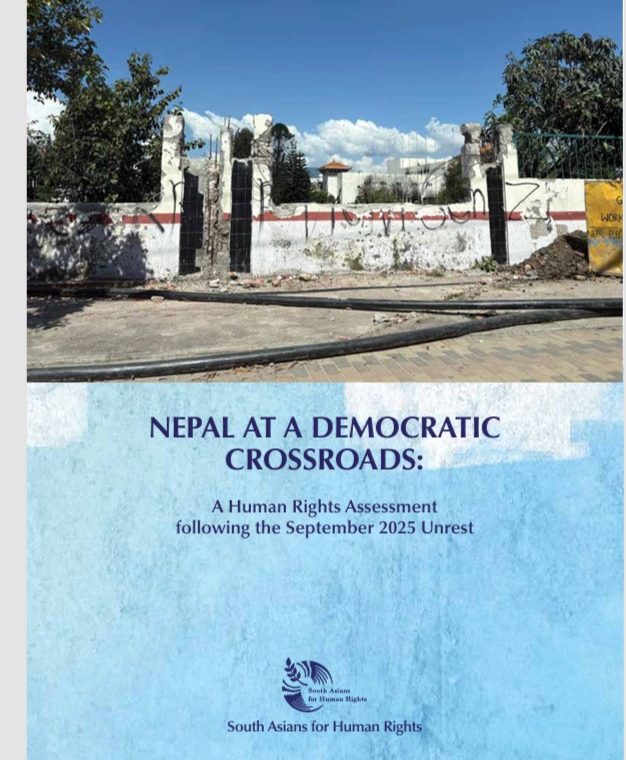

South Asians for Human Rights (SAHR), a regional network of human rights defenders, today launched a status report on the September 2025 protests in Nepal, which left more than 70 people dead, hundreds injured and key public institutions severely damaged. Based on a mission conducted in October 2025, the report documents how largely peaceful, youth-led demonstrations escalated into widespread violence, lethal use of force by state authorities, mass arson, jailbreaks and a profound breakdown of public trust in institutions.
The report finds that the Gen Z movement, as it has become known, was driven less by an immediate trigger—such as the temporary social media suspension—and more by deep, structural grievances, including corruption, entrenched political elites, exclusion from decision-making, and disillusionment with repeated electoral cycles that have failed to deliver accountable governance. SAHR’s consultations indicate that digital platforms functioned as alternative civic spaces for young people who felt marginalized from traditional political and civil society channels. Additionally, the initially peaceful protests were allegedly infiltrated by criminal and opportunistic political elements that were responsible for the arson and damage to public property.
The report documents serious concerns regarding the state’s response to the protests, particularly on 8 September 2025, when security forces reportedly used live ammunition against largely unarmed demonstrators. Hospital testimony collected by SAHR points to an unusually high proportion of severe injuries, including gunshot wounds and spinal trauma, overwhelming emergency services within hours. The following day, coordinated attacks on courts, prisons, government offices and private property further deepened institutional collapse, with thousands of prisoners reportedly escaping custody and critical judicial records destroyed.
The report raises serious questions about accountability mechanisms now in place, including the scope, composition and public credibility of the Judicial Inquiry Commission, as well as the longer-term implications of growing reliance on the Nepal Army as the ultimate guarantor of order. It also highlights the risks posed by delays or ambiguity around elections scheduled for March 2026, warning that prolonged uncertainty could further erode democratic legitimacy and civic trust.
SAHR calls on the interim authorities to ensure timely, credible elections; publish the full findings of all inquiries into protest-related killings and arson; reform crowd-control policing in line with international standards; and safeguard journalists, human rights defenders and marginalized communities. Without meaningful accountability and inclusive political reform, SAHR cautions, Nepal risks entrenching a cycle of impunity, polarization and institutional fragility at a critical juncture in its democratic trajectory.
The report can be accessed here.
On behalf of the members of the South Asians for Human Rights
Deekshya Illangasinghe
Executive Director